
The answer has changed significantly over the past decade
When clear aligners first appeared in the late 1990s, the honest answer to this question was: mostly minor issues. The technology was new, the materials were limited, and complex bite corrections were firmly in the territory of traditional braces. Many orthodontists were cautious about recommending aligners for anything beyond mild crowding or small gaps.
That is no longer the case. Advances in 3D digital planning, attachment design, aligner materials, and specialist-led treatment protocols have substantially expanded what clear aligners in Kelowna can achieve. Many cases that would have required braces a decade ago can now be treated effectively with aligners. Some still cannot. The difference between those two categories is not always obvious to patients, which is exactly why a proper assessment matters so much.
What clear aligners do well
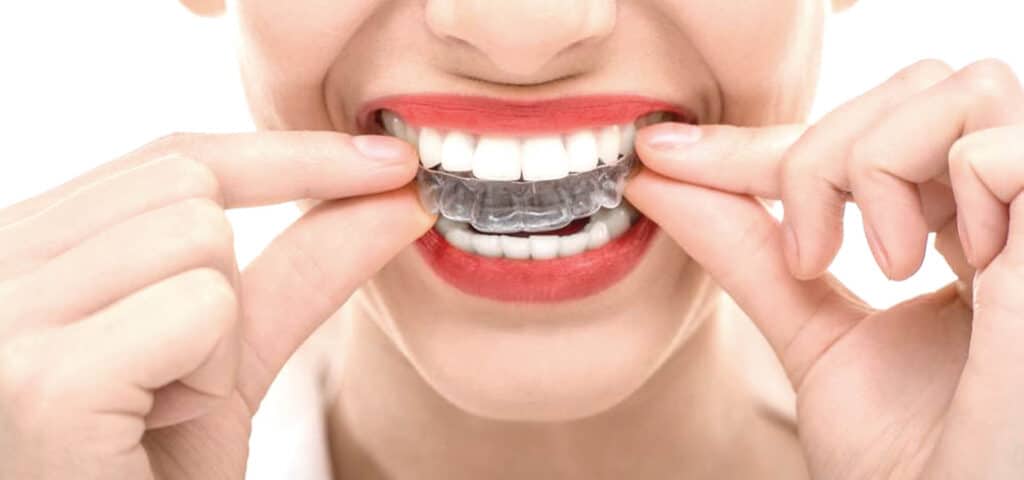
Modern aligner systems work by applying precise, controlled pressure through a series of custom trays, each one moving the teeth a small amount closer to their intended position. When treatment is planned by a certified Kelowna orthodontist using advanced imaging and digital treatment software, the range of movement achievable is considerable.
Clear aligners in Kelowna are now routinely used for:
Crowding and spacing: Mild to moderate crowding and gaps between teeth are well within the scope of clear aligner therapy. These are the cases most people picture when they think of aligners, and they remain strong indications.
Overbite correction: Aligners can address many overbites using bite ramps, precision attachments, and elastics to guide the bite. Mild to moderate overbites respond well. Very severe deep bites may require a more complex approach or combination treatment.
Underbite: Mild skeletal underbites and dental underbites, where the lower teeth sit in front of the upper, can often be managed with aligners and elastics. More significant skeletal discrepancies may require surgical collaboration.
Open bite: Anterior open bites, where the front teeth do not contact when the mouth closes, are increasingly managed with clear aligners. Research shows positive outcomes in cases where the cause is dental alignment rather than significant jaw position issues.
Crossbite: Some crossbites, particularly those involving individual teeth or limited sections of the bite, respond well to aligner therapy. Broader skeletal crossbites that involve jaw width may require additional appliances.
Relapse cases: Adults who had orthodontic treatment in their teens and have noticed gradual shifting are often excellent candidates for aligners, as the movements required tend to be less extensive.
The key factor across all these categories is that the quality of the outcome depends heavily on the expertise behind the treatment plan. Aligners are a tool. The specialist designing the movement sequence determines whether that tool is applied effectively.
Where limitations still exist
Being honest about this serves patients better than overpromising. Clear aligners are not the right tool for every situation.
Cases that are more likely to require braces, or a combination of braces and aligners, include:
- Severe skeletal discrepancies where the upper and lower jaws are significantly out of alignment relative to each other. These cases involve jaw bones, not just tooth position, and may ultimately require orthognathic surgery alongside orthodontic treatment.
- Significant vertical problems, including very deep bites or substantial open bites caused by jaw morphology rather than tooth tipping.
- Severely rotated teeth, particularly round teeth like canines, are difficult for aligners to grip and move predictably.
- Cases requiring tooth extraction as part of the treatment plan, where large amounts of space need to be closed precisely.
- Active gum disease or significant bone loss that needs to be resolved before orthodontic treatment can proceed, regardless of appliance type.
Even in some of these cases, aligners may play a role alongside other treatments. The relevant question is not always “aligners or braces” but rather what combination of tools will produce the best functional and aesthetic result for this specific patient.
The compliance factor
One thing worth being direct about: clear aligners require 20 to 22 hours of daily wear to work as planned. This is non-negotiable. Patients who wear their aligners consistently, change trays on schedule, and attend regular monitoring appointments tend to see outcomes that match or exceed expectations. Patients who frequently remove aligners, skip trays, or go long periods without wearing them will not achieve the planned result, and the timeline will extend.
This is not a criticism of patients. Life happens. But it is a real factor in determining whether aligners are the right choice for you or your teenager. A patient who knows they will struggle with compliance may actually do better with braces, which work continuously without requiring daily decisions.
At Mission Creek Orthodontics, Drs. Pollard, Diaz, and Kehler discuss this honestly during consultations. If braces are likely to produce a better outcome in your particular situation, they will tell you so. The goal is your best result, not recommending the most popular treatment.
How the assessment at Mission Creek Orthodontics works
Knowing whether clear aligners are suitable for your case starts with a thorough evaluation. At Mission Creek Orthodontics, the assessment includes digital scans, 3D imaging, bite analysis, and a full review of your jaw relationship and tooth positions before any recommendation is made.
For patients who are good aligner candidates, Invisalign treatment at Mission Creek typically runs nine to fifteen months using 18 to 30 sets of aligners, depending on case complexity. Monitoring appointments occur every six weeks. You can also preview your planned tooth movements using 3D treatment planning software before committing to treatment.
For patients whose cases fall outside what aligners can predictably achieve, the team will explain why and present the alternatives clearly. There are no hidden agendas. The recommendation will be based on what works best for your specific bite, jaw relationship, and treatment goals.
Free consultations are available for new patients. Zero-interest payment arrangements are offered to make treatment accessible, and the team will help you navigate insurance coverage.
Book a free consultation at Mission Creek Orthodontics in Kelowna
If you have been wondering whether clear aligners in Kelowna are right for your case, whether that is a straightforward alignment concern or something more complex, the only way to know with certainty is an assessment with a certified specialist orthodontist.
Mission Creek Orthodontics serves families across Kelowna, Lake Country, Peachland, Summerland, and the wider Central Okanagan. We are always accepting new patients.
Call (778) 477-5770.
Mission Creek Orthodontics 202-3975 Lakeshore Rd, Kelowna, BC V1W 1V3 Monday to Thursday: 8:30 AM to 5:00 PM | Wednesday: 9:30 AM to 6:00 PM
Free consultations available. Zero-interest payment arrangements offered. Insurance questions handled by our patient coordinator.
