
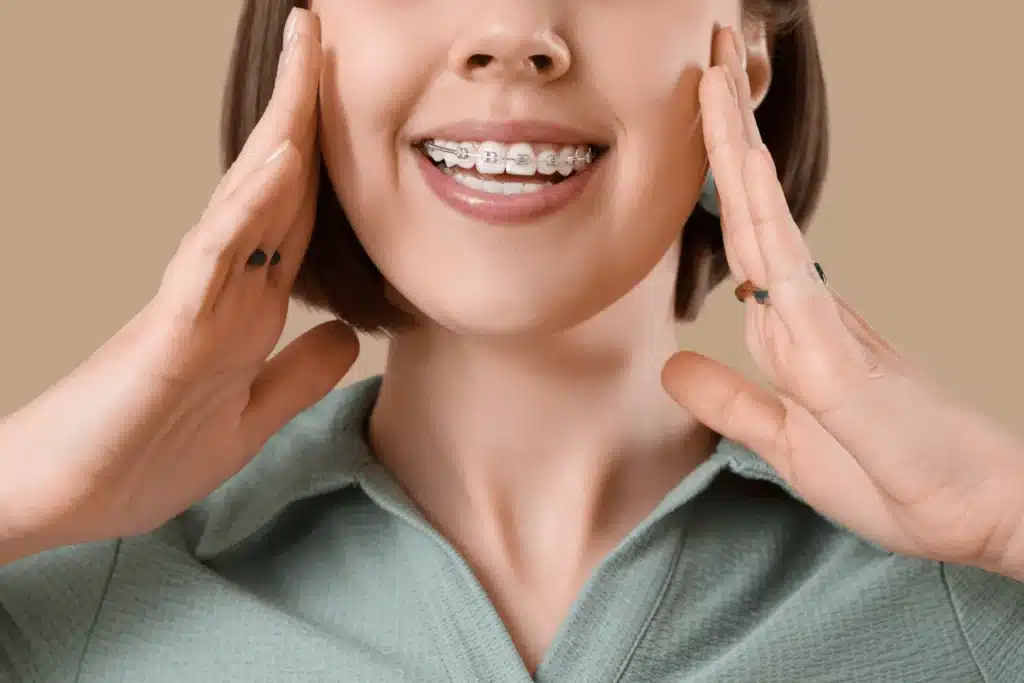
A lot of adults assume they missed the window for orthodontic treatment. Braces were something that happened in your early teens, and if your parents didn’t take you then, you just learned to live with whatever your teeth were doing.
That assumption is wrong, and it holds a significant number of people back from treatment that would genuinely improve both their oral health and their quality of life.
According to the Canadian Association of Orthodontists, 1 in 5 orthodontic patients in Canada is over the age of 21. Adult treatment has become increasingly common, and the options available today are very different from what existed even ten years ago. At Mission Creek Orthodontics in Kelowna, Drs. Derek Pollard, Diego Diaz, and Jessica Kehler work with adult patients regularly, addressing problems that have been present for years or that have developed gradually over time.
Here are the most common issues adults bring in, and what orthodontic treatment can do about them.
Crowding
Crowding is one of the most frequent reasons adults seek out a Kelowna orthodontist. It happens when there isn’t enough space in the jaw for all the teeth to sit in proper alignment. Teeth overlap, rotate, or get pushed forward or backward to compensate for the lack of space.
Beyond the cosmetic concern, crowding has a practical health dimension. Overlapping teeth are harder to clean. Standard brushing and flossing can’t reach every surface effectively when teeth are stacked against each other. Over time, this creates a higher risk of plaque accumulation, decay, and gum inflammation in the crowded areas.
Orthodontic treatment, whether with braces or Invisalign, creates space by moving the teeth into proper alignment. This makes daily oral hygiene significantly more effective, not just the smile more even.
Spacing and Gaps
The opposite of crowding, spacing issues occur when there is too much room between teeth. Gaps can appear between any teeth, though a space between the two upper front teeth is one of the most common presentations in adults.
Gaps develop for several reasons:
- Teeth that are naturally smaller than the jaw space available
- Missing teeth that cause neighbouring teeth to drift apart over time
- Habits like tongue thrusting that push teeth forward and apart
- Gum disease that causes bone loss and allows teeth to shift
Beyond appearance, gaps create pockets where food becomes trapped easily. This increases the risk of decay and gum irritation at the margins of those gaps. Orthodontic treatment closes the spaces by moving teeth into the correct positions and distributing the spacing more evenly across the arch.
Overbite
An overbite is present when the upper front teeth overlap the lower front teeth excessively in a vertical direction. A small amount of overlap is normal. A deep overbite is not.
Adults with untreated deep overbites often experience:
- Wear on the lower front teeth because the upper teeth are coming down too far onto them
- Discomfort or sensitivity in the lower front teeth over time
- Jaw tension or pain, particularly when chewing
- In more significant cases, the lower teeth bite into the roof of the mouth
Orthodontic treatment addresses overbites by moving the teeth and adjusting the bite relationship. In more complex cases, this may involve additional appliances alongside braces or Invisalign to manage the vertical dimension of the bite.
Underbite
An underbite is present when the lower teeth sit in front of the upper teeth when the mouth is closed. This is a skeletal bite issue in most cases, not just a tooth position problem, which makes it one of the more involved bite corrections.
Untreated underbites in adults can cause uneven wear across multiple teeth, jaw discomfort, and difficulty biting and chewing certain foods. In significant cases, orthognathic surgery in combination with orthodontics may be the most appropriate path. Mission Creek Orthodontics offers orthognathic surgery coordination for patients whose bite issues go beyond what tooth movement alone can address.
Crossbite
A crossbite is present when one or more upper teeth sit inside the lower teeth rather than outside them. It can affect the front teeth, the back teeth, or both.
Crossbites that go uncorrected in adults cause:
- Uneven wear on specific teeth that are in incorrect contact
- Gradual wearing down of enamel in affected areas
- Jaw shifting to one side when biting, which can lead to asymmetrical muscle strain
- Increased risk of chipping on the teeth that are out of position
Correcting a crossbite in an adult is more involved than in a child because the jaw has finished growing and is no longer as responsive to expansion. But it is still very much treatable through orthodontics, and addressing it reduces the long-term damage to affected teeth.
Shifting Teeth After Previous Treatment
This one surprises some adults. They had braces as teenagers, their teeth were straight afterward, and then over the following years, things shifted again.
This is more common than most people realize. The most frequent cause is inconsistent retainer wear after the original treatment ended. Teeth have a natural tendency to move back toward their original positions if they aren’t held in place. Without a retainer worn consistently, that drift happens gradually.
Adults in this situation typically need a shorter treatment course than someone who has never had treatment because the original alignment work was already done. The teeth are being guided back rather than moved from a completely untreated starting point.
What Treatment Options Are Available for Adults
The idea of metal braces as an adult is enough to make many people hesitate. Mission Creek Orthodontics offers several options that address this concern directly:
- Invisalign uses clear, removable aligners that are nearly invisible during normal daily life
- LightForce clear braces use tooth-coloured brackets that are far less noticeable than traditional metal braces
- Traditional braces remain the most effective option for complex bite corrections and are still chosen by many adult patients when they understand the clinical benefits
The right option depends on the complexity of the case, not personal preference alone. Drs. Pollard, Diaz, and Kehler will walk through which approach is appropriate for the specific issues being addressed.
Book a Free Consultation at Mission Creek Orthodontics in Kelowna
No referral is needed to book a consultation, and the initial visit is free. If you’ve been putting off addressing a bite or alignment issue, a conversation with your Kelowna orthodontist is the straightforward next step.
Mission Creek Orthodontics is currently accepting new adult patients. Interest-free payment plans are available. Learn more about adult orthodontics in Kelowna, Invisalign, and LightForce clear braces at Mission Creek Orthodontics.
Call 778-477-5770 or request your free consultation online. The clinic is at 3975 Lakeshore Rd, Unit 202, Kelowna, BC.
